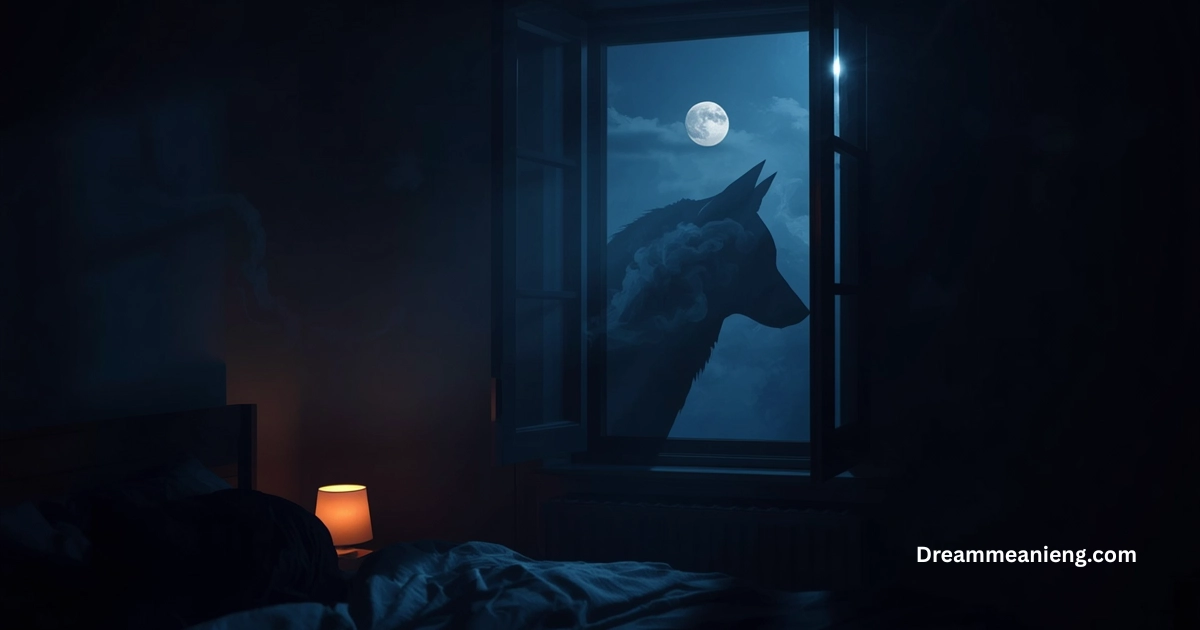
You wake up, heart still racing a little, and there’s this image stuck behind your eyes: fur, claws, maybe moonlight. So what does it actually mean? Werewolf dream meaning almost always comes down to one thing: the tension between your controlled, everyday self and whatever instincts or emotions you’ve been sitting on.
Nothing supernatural is happening to you. Your mind is just working through something real, and it reached for one of the oldest transformation symbols we’ve got. Whether you Googled this at 3am or you’re just curious, understanding werewolf dream meaning usually comes down to one specific scenario, not the werewolf in general.
Quick Answer
A werewolf dream typically represents the pull between your civilized, controlled self and your raw, instinctual side. It tends to show up during stretches of suppressed anger, a major life transition, or that specific feeling of watching a situation slip out of your hands. In short, werewolf dream meaning depends far more on what actually happens in the dream, whether you transform, run, or fight, than on the werewolf itself.
What Does It Mean to Dream About a Werewolf?
Dreaming about a werewolf means your subconscious is pointing at a part of yourself you’ve kept contained, whether that’s anger, ambition, sexuality, or grief. A plain wolf usually stands for freedom, loyalty, instinct, something whole. A werewolf is messier than that. It’s half human, half animal, stuck between two states, and that in between quality is basically the whole point of the symbol.
Dream researchers generally believe hybrid, transforming figures tend to show up when we’re wrestling with a question of identity, not just a passing feeling, more than when we’re dealing with something simpler. You’re not simply angry. You’re wondering, on some level, who you become once you stop holding that anger back.
That’s also why the emotional tone matters so much more than the visuals. A werewolf dream that leaves you feeling powerful is telling a completely different story than one that leaves you feeling hunted, even if the two dreams look almost identical on the surface.
Common Werewolf Dream Scenarios and What They Reveal
The specific action in a werewolf dream, not the creature itself, is what actually determines the meaning. Transforming into one is a different animal (pun intended) than being chased by one, even though the central symbol never changes. Here are the scenarios that come up again and again, and what each tends to reflect.
What Does It Mean When You Turn Into a Werewolf?
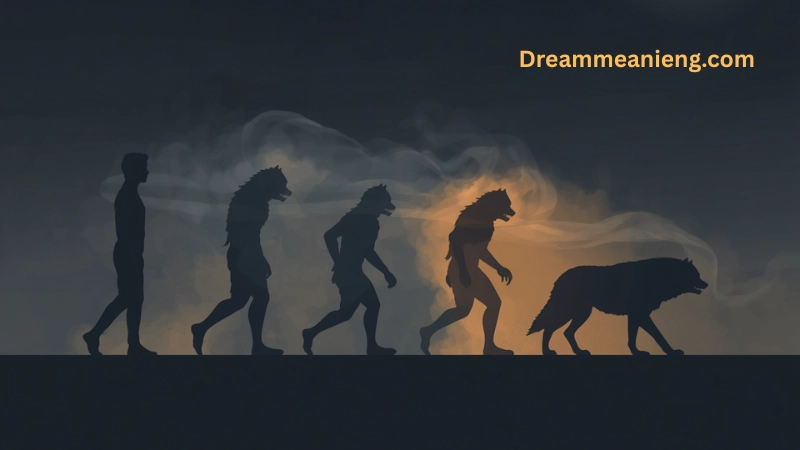
Turning into a werewolf in a dream usually points to an identity shift you’re either moving through or actively resisting. It’s one of the most common versions of this dream, and it tends to cluster around real transitions: a job that asks you to be a different person, becoming a parent, walking away from a relationship that had been shrinking who you were.
Pay attention to how the transformation feels. Liberating? Your subconscious might be nudging you toward the change. Involuntary and frightening? You’re probably not sure you’re ready for it yet, and that’s worth sitting with.
This scenario shows up a lot around big, identity altering moments. Someone going through a divorce might dream of turning into a werewolf and wake up feeling strangely relieved rather than scared, which usually says more about the relationship than the dream itself.
What Does It Mean to Be Chased by a Werewolf?
Being chased by a werewolf in a dream typically reflects an emotion or truth you’ve been avoiding while awake. Chase dreams show up constantly across every dream category, sure, but a werewolf specifically suggests whatever you’re running from is something primal: anger you won’t let yourself feel, a conversation you keep postponing, a decision that’s already made itself.
What Does It Mean If a Werewolf Bites You in a Dream?
A werewolf bite in a dream often symbolizes absorbing someone else’s negativity, stress, or influence until it starts changing you. This one doesn’t get talked about much online, but it shows up constantly in real dream reports. People who dream about being bitten are usually in close, ongoing contact with someone whose moods or demands have started to feel contagious.
Worth asking yourself honestly: whose energy have you been carrying home lately? This one comes up often for people managing a chronically stressed coworker or a family member going through their own crisis. The dream isn’t about the other person being bad. It’s about noticing how much of their weight you’ve picked up without meaning to.
What Does It Mean to Fight or Kill a Werewolf?
Fighting or killing a werewolf in a dream generally represents confronting and removing a toxic pattern, habit, or influence from your life. Interestingly, this scenario tends to feel empowering even in the middle of a dream, because your subconscious is essentially rehearsing a confrontation you’re building the courage for while awake.
Killing the werewolf outright, rather than just getting away, often shows up once someone has quietly made a decision, even if they haven’t acted on it yet.
What Does It Mean to Dream About a Werewolf Pack?
Dreaming about a werewolf pack usually reflects your relationship with belonging, loyalty, or group dynamics in waking life. It can point to genuine comfort inside a tight knit group. Or it can flag the opposite: discomfort with groupthink, peer pressure, the sense that you’re performing to stay accepted rather than actually belonging.
What Does a Friendly or Protective Werewolf Mean?
A friendly or protective werewolf in a dream suggests your instincts and deeper nature are working with you rather than against you. This one’s less common, but genuinely worth paying attention to. It tends to show up right when someone finally starts trusting their gut, on a relationship, a career move, a boundary they’d been too scared to set.
Werewolf Dream Scenario Quick Reference
| Scenario | Core Meaning | Common Emotional Tone |
| Turning into a werewolf | Identity shift or loss of control | Fear, excitement, disorientation |
| Being chased | Avoiding a suppressed emotion or person | Anxiety, dread |
| Being bitten | Absorbing someone else’s negativity or influence | Vulnerability, unease |
| Fighting or killing | Confronting or removing a toxic pattern | Determination, relief |
| Werewolf pack | Belonging, loyalty, or groupthink pressure | Curiosity, tension |
| Friendly or protective werewolf | Instincts aligned with your wellbeing | Comfort, reassurance |
The Psychological Meaning Behind Werewolf Dreams
Modern dream psychology treats werewolf dreams as a form of emotional processing that happens during REM sleep, not as a prophecy or a warning. This lines up with threat simulation theory, the idea, associated with dream researcher Antti Revonsuo, that the sleeping brain rehearses emotionally charged or threatening scenarios as a way of processing them.
Hybrid, transforming figures are a natural fit for that job, since they visually represent two states at once, which is exactly what internal conflict feels like from the inside. It’s one of the clearer, more evidence grounded angles on werewolf dream meaning, as opposed to the purely symbolic readings you’ll find on most dream sites.
This idea has real roots in psychology, not just internet dream sites. Carl Jung described the “shadow” as the part of ourselves we repress or refuse to look at directly, the traits that embarrass us or feel too aggressive to admit to. Honestly, a werewolf might be the most literal shadow figure dream imagery has to offer. The parts of you kept on a leash all day come out the moment your guard drops.
Sigmund Freud, coming at it from a different angle, would likely have read werewolf dreams as repressed instinctual drives, aggression or desire in particular, finding a symbolic way out. You don’t need to fully sign on to either framework to take the underlying point seriously. The dream is doing emotional work. It’s not delivering a message from somewhere outside yourself.
The feeling in the dream carries more weight than the visual details ever will. Fear, excitement, shame, relief, they’re each doing a different job, even when the werewolf on screen looks exactly the same.
Cultural and Spiritual Interpretations of Werewolf Dreams
Across cultures, the werewolf has long stood for the line between human self control and untamed instinct, and plenty of traditions treat meeting one in a dream as spiritually significant. You don’t have to believe in any of it literally for the context to be useful. It’s shaped how werewolf dream meaning has been read for centuries, and honestly, that history still colors how the image lands on us today, whether we realize it or not.
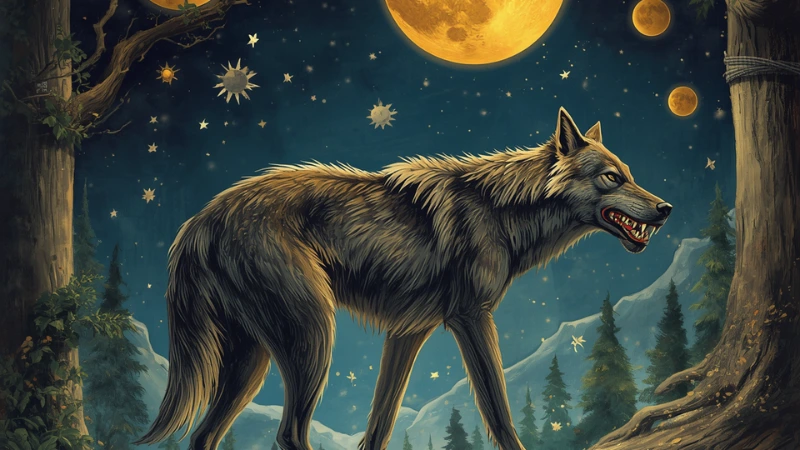
European folklore leaned hard into a moral undertone: transformation under duress, a person losing themselves to circumstance or curse. You can feel that echo in dreams where the transformation itself feels involuntary or shameful rather than empowering.
Shamanic traditions take a different view. Encountering a supernatural or hybrid being in a dream is sometimes treated as a genuine spiritual event, not pure symbolism, an initiation, a visit from a guide, a threshold moment in someone’s development.
Native American wolf symbolism, meanwhile, tends to lean toward loyalty, intuition, and guidance rather than fear, which is a useful contrast to the werewolf’s more ominous European lineage. Same base animal, wildly different emotional weight, depending entirely on which tradition you’re standing in.
Worth a quick mention too: the full moon, the classic trigger for transformation in werewolf mythology. Its presence in a dream tends to intensify the whole emotional release theme, something building steadily toward a breaking point.
Does the Color or Setting of the Werewolf Change the Meaning?
Yes, the color or setting of a werewolf in your dream adds a modifying layer to the core meaning rather than replacing it entirely. Think of these details as adjectives, not separate symbols.
White werewolf. Usually tied to new beginnings or spiritual clarity. A white werewolf can soften the intensity of the transformation theme, suggesting whatever change is underway is one you’re approaching with a clearer head than usual.
Black werewolf. Tends to point toward hidden fears or a part of yourself still sitting in shadow, not yet ready to come into view.
Red or reddish werewolf. Frequently tied to anger, urgency, or unresolved passion, something that’s been simmering a lot longer than you’ve let on.
Familiar setting. A werewolf showing up in your home, your workplace, somewhere ordinary, suggests real emotional weight hiding inside your everyday life rather than some far off crisis.
Werewolf Color and Context Modifiers
| Detail in the Dream | Added Meaning |
| White werewolf | New beginnings, spiritual clarity |
| Black werewolf | Hidden fears, the unknown self |
| Red or reddish werewolf | Anger, urgency, unresolved passion |
| Appears in your home or workplace | Everyday life carries hidden emotional weight |
| Recurring appearance | An unresolved issue your mind keeps revisiting |
Why Do I Keep Having Werewolf Dreams?
A recurring werewolf dream usually means the underlying emotional issue hasn’t been fully processed or resolved yet. Dreams don’t repeat themselves because your brain got bored. They repeat because the first attempt to get your attention didn’t land, and neither did the second.
If you’re noticing a pattern, two things are worth tracking over time: which scenario keeps coming up (chased, transformed, bitten, whatever it is), and what was going on in your life the day or two before each dream. Give it a few instances to compare and the pattern usually points somewhere pretty specific.
What to Do After a Werewolf Dream
The most useful thing you can do with a werewolf dream is treat it as a prompt for reflection, not a code to crack word for word. A few steps that actually help:
- Write it down immediately. The scenario, the setting, how you felt. Details fade fast.
- Match your scenario to the table above. Chased, bitten, transformed, and fighting all point in genuinely different directions.
- Ask what in your life mirrors the dream’s dynamic. Who or what does the werewolf’s behavior remind you of?
- Pay closer attention to the emotion than the imagery. Fear and empowerment are telling you two completely different stories.
- Track recurrence in a journal. One werewolf dream is a nudge. A recurring one is worth taking seriously.
Frequently Asked Questions
What does it mean when you dream about turning into a werewolf?
It usually reflects an identity shift you’re moving through or resisting, often tied to a real transition like a new job, a relationship ending, or becoming a parent. Whether the transformation feels freeing or frightening in the dream tells you how ready you actually feel for the change.
Is dreaming about a werewolf a bad sign?
No, a werewolf dream is not a warning or a bad omen. It reflects internal emotional processing, most often suppressed anger, an identity shift, or an unresolved conflict, rather than predicting anything about your future.
What’s the difference between dreaming of a wolf and a werewolf?
A wolf dream tends to symbolize freedom, instinct, or loyalty on its own, while a werewolf adds the theme of duality, the tension between your civilized self and your primal instincts. The hybrid form is what carries the extra emotional weight.
What does it mean if a werewolf bites you in a dream?
It often symbolizes absorbing someone else’s negativity, stress, or influence until it starts to affect you. This scenario is common for people in close, ongoing contact with someone whose moods feel contagious.
Can a werewolf dream predict the future?
Not in a literal sense. Dream science treats werewolf dreams as emotional processing rather than prophecy, though they can sometimes highlight a pattern or problem your conscious mind hasn’t fully acknowledged yet.
What does a werewolf mean in Jungian psychology?
In Jungian terms, a werewolf closely mirrors the “shadow,” the repressed or unacknowledged parts of the self. Dreaming of one often signals that a suppressed trait, whether aggression, desire, or ambition, is asking to be recognized.
Why do I keep dreaming about werewolves?
Recurring werewolf dreams typically mean the underlying emotional issue hasn’t been fully resolved. Tracking the scenario and your life circumstances around each dream usually reveals the specific pattern your mind is trying to work through.
What does it mean to dream about a werewolf protecting you?
A protective werewolf suggests your instincts and deeper nature are working in your favor rather than against you. It often appears when you’re starting to trust your gut on something you’ve been unsure about.
Final Thoughts
Werewolf dream meaning isn’t some fixed formula you plug your dream into, but it does follow real patterns, rooted in actual psychology and centuries of cultural symbolism rather than guesswork.
The scenario, the emotion attached to it, and what’s actually happening in your life at the time matter far more than the werewolf itself. If this dream keeps finding you, go easy on yourself about it. Write it down, notice how it felt, and let it point you toward whatever you’ve been avoiding looking at head on.