
Understanding tiger dream meaning starts with one idea: a tiger rarely shows up in your sleep by accident. It represents power, instinct, or fear that your mind hasn’t fully faced yet. But the exact meaning changes depending on what the tiger was doing, what color it was, and how you reacted.
This guide breaks down every major tiger dream scenario, plus the psychological and cultural meanings behind them, so you can actually figure out what your dream was trying to tell you, instead of settling for a generic one line answer that could apply to almost anyone.
Quick Answer
In most interpretations, a tiger dream meaning centers on personal power, instinct, or a fear you’re avoiding. A calm tiger reflects confidence; a chasing or attacking tiger points to something you’re running from in waking life. Color, behavior, and your own reaction all shape the specific meaning there’s no single universal interpretation, so context matters more than the animal itself.
What Does It Mean to Dream About a Tiger?
At its core, a tiger dream meaning centers on power you either hold or haven’t claimed yet. And it’s rarely a neutral symbol. Dream about a bird, and it might just be a bird. Dream about a tiger, and something is usually trying to get your attention.
Here’s the logic behind that: most dream analysts agree the subconscious mind rarely reaches for an apex predator to represent something small. When a tiger shows up, it’s often standing in for something that feels too big, too urgent, or frankly too intense to look at directly during the day.
In practice, this shows up constantly around high stakes moments. Someone dreaming of a tiger the week before a big presentation or a hard conversation with a partner is usually working through anticipatory pressure, not literal danger. The tiger just gives that pressure a shape.
Broadly, tiger dreams tend to point in one of two directions.
- Power you’re claiming. Confidence, assertiveness, ambition, or a decision you’re finally ready to make.
- Power you’re avoiding. A fear, a person, or a truth you’ve been circling without confronting.
There’s actually some science behind why predators dominate our dreams so often. Finnish sleep researcher Antti Revonsuo proposed threat simulation theory the idea that dreaming about danger is the brain’s way of rehearsing how you’d respond to a real threat, even when nothing dangerous is actually happening. Tigers, being one of the most universally recognizable predators on the planet, make an obvious stand in for that rehearsal.
Tiger Dream Meaning by Scenario: What Was the Tiger Doing?
The tiger’s behavior in the dream changes the meaning more than the animal itself. A tiger quietly watching you from a distance is a completely different message than one lunging at your throat, even though technically it’s “the same” symbol showing up both times.
So here’s how to actually read the most common scenarios.
What Does It Mean When a Tiger Is Chasing You in a Dream?
Being chased by a tiger in a dream usually means you’re avoiding something in waking life rather than facing it directly. Maybe it’s a conversation. Maybe it’s a deadline you keep pretending doesn’t exist. Or maybe it’s an emotion you’ve gotten very good at not thinking about.
Where the chase happens matters more than people assume:
- Chased across an open field or street this often reflects a broader, external pressure: a looming decision, a job change, or a life direction you keep putting off.
- Chased indoors, through hallways or rooms this tends to point to something more personal and immediate, like a specific conversation or a feeling you can’t outrun because it lives inside your own space.
The instinct to run is really the message here. Worth asking yourself: what would actually happen if you stopped and turned around?
What Does It Mean to Dream About a Tiger Attacking You?
A tiger attacking you in a dream typically reflects a conflict, a person, or a self doubt that’s moved from background noise into something demanding your attention right now. It’s a step past avoidance whatever you’ve been dodging has finally caught up with you.
What happens next in the dream tends to shape the deeper meaning:
- You fight back. Often a sign that you already have what it takes to handle the conflict, even if it doesn’t feel that way yet.
- You’re overpowered. Can point to a situation where you genuinely feel outmatched, whether that’s by a person, a workload, or your own inner critic.
What Does a Friendly or Calm Tiger in a Dream Mean?
A calm or friendly tiger in a dream generally represents integration you’ve stopped fighting your own strength and started trusting it. Honestly, this is one of the better tiger dreams to wake up from.
Worth separating this from a sleeping tiger, though, because it’s a different symbol entirely. A sleeping tiger usually points to untapped potential, ability that hasn’t been switched on yet. A calm, awake tiger is a step further along: power you’re already using, and using with some confidence.
What Does It Mean to Dream About Killing a Tiger?
Killing a tiger in a dream commonly reflects overcoming an obstacle or a fear that’s been running the show. On the surface, that reads as a victory dream, and often it is exactly that.
But there’s a messier layer worth sitting with. Since the tiger often represents your own instinct or power, killing it can sometimes mean you’re suppressing part of yourself to meet someone else’s expectations. How did you feel when you woke up? Relieved usually points to the first meaning. Hollow or a little uneasy points to the second.
Tiger Behavior → Meaning Quick Reference
| Tiger’s Behavior | What It Likely Reflects |
| Watching you, still | Latent power or a decision you haven’t acted on yet |
| Chasing you | Avoiding a fear, responsibility, or emotion |
| Attacking you | A conflict or self doubt demanding attention |
| Calm or friendly | Confidence and self acceptance |
| Sleeping | Untapped potential or dormant strength |
| Caged | Restrained power, anger, or creativity |
| Killed by you | Overcoming an obstacle, or suppressing your own instincts |
Does the Tiger’s Color Change the Meaning?
Yes the color of the tiger in your dream acts as an emotional filter on its core meaning. Two people can have almost the exact same dream, chased through the same kind of forest, same sense of dread, but a white tiger versus a black tiger sends them in very different directions once they start unpacking it.
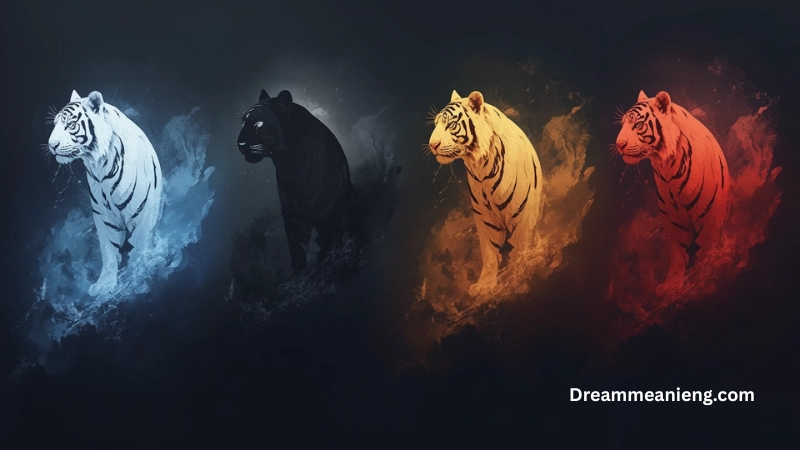
- White tiger. Tied to spiritual clarity and purified strength. These dreams tend to show up during periods of real personal growth, when intuition feels a bit sharper than usual.
- Black tiger. Connected to the shadow self, the hidden or repressed side of your personality. Not inherently negative more often a sign that something unacknowledged is finally ready to be looked at.
- Orange or golden tiger. The classic tiger color, and it’s tied to raw vitality, ambition, survival instinct. These dreams show up a lot when you’re being called to assert yourself more than you currently are.
- Red tiger. Less common, but it keeps coming up as a caution symbol. A nudge to trust your gut about someone or something that isn’t quite what it appears to be.
Tiger Color → Symbolic Meaning
| Tiger Color | Core Symbolism | Possible Waking Life Reflection |
| White | Spiritual awakening, purity | Inner clarity, calm confidence |
| Black | Shadow self | Repressed emotion, hidden power |
| Orange / Gold | Vitality, instinct | Ambition, confidence, survival drive |
| Red | Warning | Distrust, betrayal, or misplaced trust |
Tiger Dream Meaning in Psychology: What Jung and Sleep Science Say
Psychologically, a tiger dream often represents what Carl Jung called the shadow self. Jung used the term to describe the parts of our personality we push out of view because they don’t fit the image we’d like to project, and he believed those parts don’t just disappear. They wait. Animal dreams, especially ones involving something as forceful as a tiger, are one of the more common ways the shadow finds a way back into view.
This ties into Jung’s broader idea of individuation: the lifelong process of pulling different parts of the self into something more whole. A tiger dream, in this framework, isn’t asking you to become fierce or aggressive. It’s asking you to stop keeping some part of yourself at arm’s length, whether that’s anger, ambition, sexuality, or plain old self assurance.
From a more clinical angle, sleep researchers lean on threat simulation theory to explain why predator dreams show up so consistently across cultures. The theory suggests dreaming about danger is an evolved rehearsal mechanism, your brain practicing a threat response somewhere low stakes. It’s part of why tiger dreams can feel so viscerally real even though absolutely nothing dangerous is happening.
Recurring tiger dreams deserve a closer look. In dream psychology, a symbol that keeps coming back usually signals an unresolved emotional pattern rather than a passing mood. If your tiger dreams repeat, pay attention to whether the tiger’s behavior shifts over time. A change from aggressive to calm often mirrors real progress in how you’re processing whatever the tiger stands in for.
What Tigers Symbolize Across Cultures and Religions
Across most cultural and religious traditions, the tiger is treated as a guardian and power symbol rather than a purely threatening one. That context matters for tiger dream meaning specifically, because it reframes a genuinely frightening dream as something closer to a message than a warning.
Chinese Symbolism
In Chinese tradition, the tiger is one of the Four Sacred Beasts and is believed to ward off evil spirits and misfortune. There’s an old piece of folklore around the markings on a tiger’s forehead, said to resemble the Chinese character for “king,” a small visual reminder of the tiger’s status as a natural born authority figure. Dreaming of a tiger here often points to leadership stepping forward, whether or not you feel ready for it.
Hindu Symbolism
In Hindu tradition, the tiger is the vahana, or vehicle, of the goddess Durga, representing Shakti, divine feminine power and cosmic energy. A tiger dream in this context is frequently read as a message about spiritual strength and the balance between control and surrender.
Korean Folklore
Korean folklore treats the tiger as a mountain guardian spirit, appearing throughout traditional folk paintings, often alongside a magpie. Some interpretations read that pairing as a mix of good fortune and gentle warning, since the magpie is traditionally seen as a messenger and the tiger as the force it’s answering to. A tiger dream in this tradition can carry a dual message: guidance, with a nudge to stay alert.
Biblical and Islamic Interpretations
In biblical interpretation, the tiger is generally associated with strength paired with danger, a symbol of the tension between protection and threat, power used well or used carelessly.
In Islamic dream interpretation, drawing on traditions like those of Ibn Sirin, a tiger often represents a powerful person in the dreamer’s life, someone with real influence over your circumstances, for better or worse. The specific meaning tends to hinge on how the tiger behaves toward you, echoing the same behavior based logic you’ll find in Western interpretation.
Other Common Tiger Dream Scenarios
Multiple tigers, tiger cubs, and tigers that change shape each carry their own meaning, separate from the core behavior and color framework above.
- Multiple tigers. Seeing more than one tiger often points to competing pressures pulling at you from different directions, or in a family or workplace setting, a collective power dynamic you’re navigating whether you asked for it or not.
- Tiger cubs or baby tigers. These dreams typically reflect emerging confidence, or potential that hasn’t fully matured yet, like an idea or skill still in its early stages.
- A tiger turning into another animal. This shapeshifting scenario usually reflects a shifting relationship with power itself. The underlying energy is changing form, not disappearing.
- A tiger in your house. Often symbolizes power or success entering your personal life directly, rather than staying confined to work or public life.
- Two tigers fighting each other. When the tigers fight one another instead of you, it commonly reflects an internal conflict between two competing values or desires. Not an external threat at all.
Tiger or Lion Dream: What’s the Difference?
Tigers represent solitary instinct and personal power, while lions symbolize social authority and leadership within a group. It’s a small distinction that ends up mattering quite a bit.
Tigers are largely solitary animals in nature, which is likely why tiger dreams tend to center on your individual strength, the parts of you that operate independently of anyone’s approval. Lions live and hunt in prides, so lion dreams lean more toward leadership, family dynamics, or where you stand within a group. Dreamed of both in the same scene? Might be worth asking whether the tension is between your personal instincts and your public role.
Frequently Asked Questions
What does it mean when you dream about a tiger chasing you?
It usually means you’re avoiding a fear, decision, or responsibility in waking life instead of confronting it directly. The specific setting of the chase can offer clues about whether the pressure feels external or deeply personal.
Is dreaming about a tiger good luck?
Tiger dreams are neither strictly good nor bad the meaning depends on the tiger’s behavior and your emotional reaction. A calm or friendly tiger tends to signal confidence, while a threatening one usually points to something needing your attention.
What does a white tiger dream mean?
A white tiger dream is generally linked to spiritual clarity and purified strength. These dreams often appear during periods of personal growth, when intuition feels sharper and more trustworthy than usual.
Why do I keep having recurring tiger dreams?
Recurring tiger dreams typically signal an unresolved emotional pattern that hasn’t been fully processed. Pay attention to whether the tiger’s behavior shifts over time, since that change often mirrors real progress in how you’re handling the underlying issue.
What does it mean to dream about a tiger and a lion together?
This can reflect tension between personal instinct, represented by the tiger, and social or leadership pressures, represented by the lion. It often shows up when you’re weighing your own needs against your responsibilities to a group.
Does dreaming about a tiger mean pregnancy?
There’s no established, evidence based link between tiger dreams and pregnancy. In folk interpretation, some traditions read a tiger dream during pregnancy as a symbol of a strong, spirited child, though this remains cultural rather than clinical.
What is the spiritual meaning of a tiger in a dream?
Spiritually, a tiger is most often treated as a guardian and power symbol across Chinese, Hindu, Korean, and Islamic traditions. The recurring theme is protection and authority rather than pure danger.
What does it mean to dream about a tiger biting you?
A tiger biting you in a dream often marks the moment something you’ve been ignoring crosses into real consequence. It tends to appear during periods of emotional burnout or when instinct has been overridden for too long.
Conclusion
If there’s one real takeaway here, it’s that tiger dream meaning isn’t fixed. It shifts with the tiger’s behavior, its color, and whatever emotion you carried out of the dream with you. The same animal can represent a fear you’re running from or a strength you’re finally ready to claim, and honestly, only you can tell which one actually fits.
So next time a tiger shows up while you’re asleep, try jotting down the details before they fade what it was doing, what color it was, how you felt the moment you woke up. That’s usually where the real meaning is hiding, in the small stuff you’d otherwise forget by breakfast.