

Ever wake up shaken, disoriented, still half convinced something out of your fever dream was real? You’re not imagining the intensity, and you’re not the only one searching for the fever dream meaning behind it. These dreams just hit differently. More vivid. More distorted. Weirdly emotional, in a way that lingers long after the fever breaks.
Some people are convinced there’s a message buried in there somewhere. Others just want the images to stop. This guide covers both sides of the actual science of why fever dreams happen, and whether they’re trying to tell you anything at all.
Quick Answer
A fever dream is a vivid, often bizarre dream that occurs when your body temperature rises during illness, disrupting the brain’s normal sleep and temperature regulation systems. Expect repetitive tasks, distorted spaces, or intense emotion rather than anything resembling a realistic scene. Most sleep scientists agree fever dreams don’t carry a fixed symbolic meaning but they can still mirror the physical discomfort and emotional stress of being sick.
What Is a Fever Dream?
A fever dream is an unusually vivid, often unsettling dream that occurs when your body temperature rises during illness, disrupting normal brain function during sleep. Regular dreams tend to replay scraps of your day: a work email, an argument, something you saw on your commute.
A fever dream doesn’t bother with any of that. It feels untethered from anything real, stranger and far more intense, and it sticks with you in a way an ordinary dream almost never does.
Blame the hypothalamus. That’s your brain’s internal thermostat, and when your temperature spikes, it along with the cerebral cortex stops processing information the way it normally would overnight. What comes out the other side is basically cognitive static, dressed up as dream content.
A handful of scenarios show up again and again in people’s accounts:
- The endless task loop folding the same towel over and over, or counting something that never runs out, with zero sense the task will ever end.
- The breathing room walls that pulse, stretch, or close in, like the space itself has come alive.
- The faceless follower being chased by something with no clear shape, just a looming, wordless sense of threat.
- The tiling hallucination is a pattern (tiles, bricks, static) that seems to multiply across every surface, endlessly.
None of this is random, oddly enough. Each one traces back to something specific happening inside an overheated, sleep disrupted brain which is exactly what we’ll get into next.
Why Do Fever Dreams Happen? (The Science Explained)
Fever dreams happen because a rising core body temperature disrupts the hypothalamus and fragments REM sleep, causing the brain to generate more bizarre, disjointed imagery than it would during a normal night’s rest.
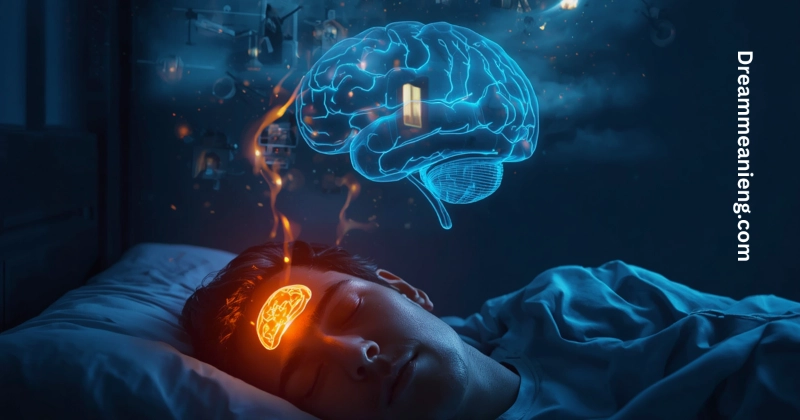
Here’s the mechanism, stripped of the jargon. When your body is fighting an infection, your immune system releases cytokines signaling proteins that tell the hypothalamus to bump up its internal “set point.” That’s what a fever actually is. And that same shift in thermoregulation messes with REM sleep, which happens to be the stage most linked to vivid dreaming.
So instead of cycling smoothly through sleep stages, a feverish brain wakes up more, often right in the thick of REM. That does two things at once: it makes dreams feel unfinished or stuck on a loop, and it means you’re far more likely to surface mid dream and actually remember the thing.
Heat itself seems to bleed straight into the dream content too. It’s common to end up dreaming about:
- Burning environments: a house on fire, a desert with no shade in sight, a room that keeps somehow getting hotter.
- Drowning in heat sensations struggling to breathe underwater, or being submerged in something warm and suffocating.
- Threat heavy scenarios chased, cornered, no way out. Researchers tie this to amygdala hyperarousal, basically your brain’s threat detector working overtime while your body’s already in distress.
This lines up with what sleep researchers call the continuity hypothesis of dreaming the idea that dream content reflects what’s happening in your waking (or feverish) body and mind, rather than being pulled out of thin air.
A 2020 study published in Frontiers in Psychology backs this up directly fever dreams reported by participants were measurably more bizarre and more negatively toned than their regular dreams, with far more references to heat and physical discomfort. That’s about as close to a research backed fever dream meaning as the science currently gets.
The Fever Dream Meaning Debate: Biology or Something More?
Most sleep scientists agree fever dreams don’t carry a fixed symbolic meaning, but many psychologists note they can still reflect the emotional stress and physical discomfort of being ill.
Two camps exist here, and honestly, they’re not even arguing about the same thing.
Camp one call it the biological camp treats a fever dream as a pure byproduct. Static on a radio, not a message. Your brain’s usual filtering systems go offline for a night, and this is what leaks through.
Camp two takes a softer view. Borrowing loosely from Freud’s idea that dreams process unresolved tension, and Jung’s take on the subconscious surfacing whatever the conscious mind keeps suppressed, some therapists argue a fever dream’s intensity works like an emotional pressure valve. Especially if you were already anxious or running on empty before you got sick.
There’s a middle ground too: threat simulation theory, developed by Finnish dream researcher Antti Revonsuo. The thought here is that your brain might be “rehearsing” threat responses while you’re vulnerable, which would explain why so many fever dreams involve being chased or trapped. Not hidden symbolism, just a body under siege, producing a mind that’s rehearsing survival.
So if you’re asking what a fever dream actually means, here’s the honest answer: biologically, not a whole lot on its own. Emotionally? It can act like a mirror, reflecting whatever stress you were already hauling around before you got sick.
Cultural, Spiritual, and Historical Views on Fever Dreams
Long before modern sleep science, cultures across history viewed fever induced visions as spiritually significant rather than purely physiological.

Take Aelius Aristides, a Greek orator writing in the second century. He described his fevered visions as genuine divine encounters not noise, not a symptom, but something worth recording as meaningful. Quite a contrast to how clinically we talk about the same experience today.
Various folk and shamanic traditions treated fever itself as a kind of threshold, a liminal state where the line between body, mind, and spirit world supposedly thinned out. A vivid feverish vision wasn’t waved off as “just the illness talking.” It was treated as a visit. Sometimes a warning. Sometimes an initiation.
That framing hasn’t fully disappeared, either; it’s just gone secular. We still say a chaotic news cycle or a disorienting week “feels like a fever dream,” borrowing the phrase as shorthand for anything too intense and strange to feel fully real, long after its literal medical meaning stopped being the point.
Worth holding both ideas at once, really: the biology explains why fever dreams happen, and the cultural history explains why people have always found them significant regardless.
Common Fever Dream Scenarios and What They Reflect
While fever dreams don’t follow fixed symbolism, certain scenarios recur often enough that sleep researchers can explain why they happen.
| Common Scenario | Likely Explanation |
| Repetitive, never ending task (folding laundry, climbing stairs that never end) | Cognitive “looping” caused by disrupted cortical processing during fragmented REM |
| Objects or rooms changing size | Spatial distortion from thermal stress affecting the cerebral cortex |
| Being chased by a faceless figure | Amygdala hyperarousal heightened threat response during physical distress |
| Drowning or overheating imagery | The body incorporating real physical fever sensations directly into dream content |
| Talking animals or impossible scenes | General REM bizarreness, amplified by “cognitive noise” from an overheated brain |
None of these need a mystical explanation to make sense. Doesn’t make them any less unsettling to actually live through at 3am, though.
How Are Fever Dreams Different From Nightmares, Normal Dreams, and Lucid Dreams?
Fever dreams differ from nightmares, normal dreams, and lucid dreams mainly in their trigger physical illness rather than psychological stress or intentional awareness.
| Dream Type | Trigger | Typical Content | Feels Controllable? |
| Fever Dream | Elevated body temperature | Repetitive tasks, distortion, physical discomfort | No |
| Nightmare | Stress, trauma, or anxiety | Threat based, fear driven scenarios | No |
| Normal Dream | Everyday memory processing | Realistic, social, mundane | No |
| Lucid Dream | Prefrontal cortex activity during REM | Self aware, sometimes controllable | Yes |
One related but distinct experience worth naming: delirium. Delirium is confusion and altered awareness while awake, usually alongside a very high fever, and it’s a more serious concern than a fever dream, which strictly happens during sleep. Someone confused or hallucinating while conscious isn’t having a fever dream that’s delirium, and it needs medical attention.
Are Fever Dreams a Cause for Concern?
Fever dreams themselves are not dangerous, but certain warning signs like confusion while awake, a very high or persistent fever, or an accompanying stiff neck or seizures mean you should seek medical attention.
A few things worth keeping in mind:
- A fever dream on its own, even a genuinely distressing one, isn’t a medical emergency.
- A fever above 103°F (39.4°C) in adults, or any fever paired with a stiff neck, severe headache, rash, or trouble breathing, is worth a call to a doctor.
- Confusion or hallucinations while awake, not just in the dream, is the real signal to seek care quickly, especially for young kids or older adults.
These are general guidelines, not a substitute for medical advice if you’re at all unsure, a quick call to your doctor or a nurse line beats guessing. Short version: trust the dream to fade once the fever does, but don’t brush off symptoms showing up outside of sleep.
Do Fever Dreams Affect Children Differently Than Adults?
Children tend to report fever dreams more often than adults, likely because kids run higher fevers more frequently and have less developed cognitive filtering during sleep.
A kid’s still developing brain also has a harder time separating dream from reality once they wake up, which can make the whole thing feel scarier than the identical dream would for an adult. If your child wakes up upset, a cool washcloth on the forehead helps, so does calm reassurance that it was “just a dream” and keeping the room comfortably cool instead of piled with blankets goes a long way too.
How to Reduce or Cope With Fever Dreams
The most effective way to reduce fever dreams is to treat the underlying fever itself through hydration, fever reducing medication, and a cooler sleep environment.
What actually helps:
- Bring the fever down directly with an appropriate over the counter option like acetaminophen or ibuprofen, check the label, or ask a doctor if you’re unsure.
- Drink more than you think you need. Dehydration tends to make both the fever and the dreams that come with it more intense.
- Cool down the room. Lower temperature, breathable bedding, lighter sleepwear all of it chips away at the thermal stress driving the distortion.
- Skip the heavy meal or the late coffee. Both tend to stir up restlessness and dream intensity right when you don’t need either.
- Jot the dream down if it’s still bothering you the next day not because it’s hiding a secret message, but because writing it out can help you shake the unease it left behind, separate from the illness itself.
Frequently Asked Questions
What is a fever dream? A fever dream is a vivid, often bizarre dream that happens when your body temperature is elevated during illness. It tends to feel more intense and disjointed than a typical dream, often involving repetitive tasks or distorted, unsettling imagery.
Why do fever dreams feel so real? Fever dreams feel real because a rising body temperature disrupts REM sleep and heightens brain activity in areas tied to sensory perception, making the imagery feel unusually vivid and immersive compared to ordinary dreams.
Are fever dreams a sign of a serious illness? Not on their own. Fever dreams are a normal response to illness related temperature changes. However, a very high fever, confusion while awake, or symptoms like a stiff neck alongside the fever should prompt a call to a doctor.
What’s the difference between a fever dream and a nightmare? A fever dream is triggered by physical illness and body temperature changes, while a nightmare is typically triggered by psychological stress, anxiety, or trauma even though both can feel frightening and vivid.
Can medication cause fever dreams? Yes, some medications, including certain antibiotics and fever reducers themselves, can disrupt sleep patterns or affect brain chemistry in ways that intensify dream vividness. This effect tends to be strongest when a medication is taken while you’re already feverish, since your sleep architecture is already fragmented to begin with.
What’s the psychological fever dream meaning behind repeating dreams? Not in a fixed, symbolic sense but many psychologists believe the emotional intensity of a fever dream can reflect stress or tension you were already carrying before you got sick. A repeating dream, in particular, often points to an unresolved worry your mind keeps circling back to rather than letting go of, especially once illness lowers your usual mental defenses.
How long do fever dreams usually last? Fever dreams typically stop once your body temperature returns to normal, meaning they usually resolve within a few days alongside the underlying illness rather than persisting on their own. If vivid, unsettling dreams continue well after your fever has broken, it’s worth mentioning to a doctor, since something else like medication or an unrelated sleep issue may be behind it.
Can you have a fever dream without actually being sick? It’s uncommon, but similar dream experiences can occur from heat exhaustion, certain medications, or extreme sleep deprivation situations where body temperature or brain chemistry shifts in ways that resemble a true fever state.
Conclusion
So, is there a hidden message in your fever dream? Probably not, if we’re being honest. It’s your body processing illness through a brain that’s temporarily running too hot to filter things properly.
But knowing biology doesn’t make the experience feel any less real in the moment, the loops, the faceless threats, the room that won’t stop breathing. Your mind is just doing its best with a system that’s briefly out of balance.
Rest up, drink your water, and trust that whatever strange territory your fever dream means dragging you through, it’ll pass along with the fever that caused it.