

There’s a particular kind of ache that comes with a goal you haven’t given up on but also haven’t touched in years. That ache has a name. Deferred dream meaning refers to the emotional weight carried by a hope, plan, or ambition that has been delayed rather than abandoned.
Most people first meet the phrase through a short, haunting poem. But its reach goes way beyond literature, into psychology, culture, and even the dreams that visit us while we sleep. Let’s walk through it together, gently and completely, so you leave with a real answer instead of more questions.
Quick Answer
Deferred dream meaning describes the emotional and psychological weight of a goal or ambition that has been delayed, not abandoned. The phrase comes from Langston Hughes’s 1951 poem “Harlem,” which asks what happens to a postponed dream, and it has since grown into a wider symbol used in psychology, culture, and dream interpretation to describe hope that is paused rather than lost.
What Does Deferred Dream Meaning Actually Refer To?
Deferred dream meaning describes the state of an ambition that has been paused by circumstance, fear, or timing, rather than one that has failed or died. It’s a specific emotional category, distinct from disappointment and distinct from grief, even though it can feel like both at once, sometimes in the same afternoon.
Here’s the distinction that actually matters: reversibility. A deferred dream is postponed and still recoverable. An abandoned dream has been consciously set down. A lost dream is one that circumstances have made truly impossible. Most people mix up the first category with the other two, and honestly, that’s where a lot of the unnecessary suffering starts.
This shows up in two contexts people tend to blur together:
- The cultural and literary meaning, rooted in Langston Hughes’s poem and the broader idea of a postponed goal or unfulfilled ambition.
- The symbolic meaning, when this exact theme, a delayed dream, an unfinished goal, a paused plan, shows up inside an actual dream while you sleep.
Two quick examples make the difference concrete. A woman who shelved a nursing degree for eight years while raising three kids is living a deferred dream in the literal, waking sense. A man who keeps dreaming, while asleep, that he’s back in art school but can never find his classroom is working through the same feeling in a different language.
Where Does the Phrase “A Dream Deferred” Come From?
The phrase comes from Langston Hughes’s 1951 poem “Harlem,” written during the later years of the Harlem Renaissance to capture the frustration of postponed opportunity within the Black American experience.
Hughes never answers his own question, by the way. He just asks it, again and again, through a series of images that have long outlived their original moment. The poem later gave Lorraine Hansberry the title for her 1959 play A Raisin in the Sun, which dramatized exactly what a deferred dream looks like inside one working class Chicago family.
The historical context isn’t a footnote here, it’s the whole point. In 1951, Hughes was writing about a community that had been promised freedom and opportunity generations earlier and was still waiting. Eleven lines. That’s all the poem is. Yet it somehow carries the weight of an entire era of postponed justice. That specific, historical grief is a big part of why the phrase still lands so hard today, even for readers with no direct connection to that history. Deferred dream meaning, at its origin, was never abstract. It was lived, daily, by real people.
What Do the Symbols in the Poem Actually Mean?

Each image in Hughes’s poem represents a distinct way that a delayed dream can affect a person, ranging from slow decay to sudden release. Line them up side by side and the emotional range of the poem gets a lot clearer.
| Symbol from the poem | What it represents |
| Raisin drying in the sun | A slow, quiet loss of vitality and motivation over time |
| Festering sore | Unresolved pain that worsens the longer it goes unaddressed |
| Rotten meat | Decay caused by prolonged denial or avoidance |
| Crust and sugar over | A dream disguised as contentment, resignation mistaken for peace |
| Sagging heavy load | A chronic emotional burden carried quietly, day after day |
| Explosion | A sudden release of long suppressed frustration or ambition |
None of these are just pretty poetic devices, either. They map onto situations you’ve probably lived, or at least watched a friend live through:
- The raisin: a musician who stopped practicing after college and, without ever really noticing, stopped calling herself a musician at all.
- The festering sore: someone passed over for a promotion three times who now flinches at every performance review, the original hurt never actually dealt with.
- The sugar coated dream: a man who insists he’s “happy where he is” but conveniently changes the subject whenever his old business plan comes up.
- The explosion: a sudden, wildly out of character decision to quit a stable job after fifteen years of quietly resenting it.
What Does It Mean When You Dream About a Delayed or Abandoned Goal?
Dreaming about a delayed or abandoned goal usually reflects unresolved tension between what you genuinely want and what you currently believe is realistic or possible for you. This is where deferred dream meaning stops being about literature and starts being about dream interpretation proper.
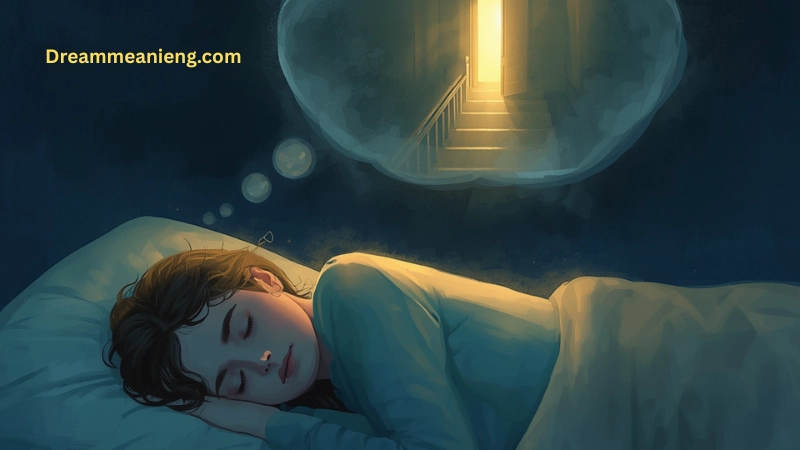
Carl Jung had a theory that recurring dream imagery often points to parts of the self asking for attention, what he called the unlived life pressing against the conscious mind. Freud, on the other hand, tended to read these dreams as wish fulfillment, the mind rehearsing a desire it can’t yet act on while awake. Both readings are useful. Neither cancels out the other, which is honestly kind of refreshing given how much these two usually disagreed.
A few specific, common versions of this dream, and what they tend to point toward:
- Missing an exam or a deadline in the dream: subconscious anxiety that a real, current opportunity is slipping away while you’re distracted by other obligations.
- Returning to an old, unfinished career path: unresolved identity conflict, often surfacing right when you’re reevaluating who you’ve become versus who you once planned to be.
- A wedding, graduation, or milestone that keeps getting postponed in the dream: fear centered on timing itself, not fear of the goal or the relationship.
- Recurring dreams about running out of time: internalized pressure, frequently tied to comparing your progress against peers or a self imposed timeline nobody actually handed you.
These dreams aren’t predictions. They’re the subconscious doing what it does best, surfacing what the waking mind has been too busy, or too scared, to look at directly.
How Does a Deferred Dream Affect Mental Health?
Repeatedly postponing a meaningful goal is linked to documented psychological strain, including chronic frustration, reduced motivation, and, in prolonged cases, symptoms that overlap with anxiety or low grade depression.
The mechanism isn’t mysterious once you break it down. Psychologists describe a form of cognitive dissonance, a concept first outlined by Leon Festinger, that builds when a person’s daily actions no longer match the identity they still privately hold onto. Take a person who thinks of herself as “a writer who just hasn’t published yet” but hasn’t written in three years. She’s carrying two conflicting self images at once, and maintaining that gap is genuinely exhausting, even when nothing dramatic is happening on the surface.
Left alone long enough, this can tip into something closer to learned helplessness, a state where a person stops attempting the goal altogether. Not because they no longer want it. Because repeated delay has quietly taught them that trying doesn’t change the outcome. That’s a different animal from simple disappointment, which tends to fade on its own. Chronic deferred goal strain doesn’t fade the same way. It usually needs to be named and actively addressed before it loosens its grip.
Here’s the good part, though: naming it is often the first real relief a person feels. Saying “I have a deferred dream” instead of just carrying around a vague, formless dissatisfaction gives the feeling a shape. And a shape is something you can actually work with.
One honest caveat: if what you’re feeling goes beyond frustration into ongoing sadness, hopelessness, or anxiety that doesn’t lift, that’s worth bringing to a therapist or doctor rather than working through alone. This article can help you name the pattern, but it isn’t a substitute for professional support.
Cultural and Religious Perspectives on Deferred Dreams
Different traditions frame a deferred dream in distinct ways, as collective injustice, as spiritual testing, or as a natural and even necessary part of personal growth.
| Perspective | How it frames a deferred dream |
| African American / Civil Rights context | A collective, systemic delay of opportunity, dignity, and equality |
| Christian and other faith based views | A test of patience and trust, echoed in stories like Moses leading a generation who would not live to see the promised land |
| Secular psychology | A signal to reassess the goal itself, its timeline, or one’s own self belief |
| Buddhist influenced perspective | Attachment to a fixed outcome, rather than the delay itself, as the true source of suffering |
Rabbi Harold Kushner, drawing on Hughes’s poem in his own writing, noticed that people tend to fall into one of three postures toward their dreams. Some keep dreaming boldly despite the odds. Some scale their dreams down to protect themselves from disappointment. Others stop dreaming altogether out of fear. None of that is a character flaw, whichever camp you fall into. They’re just different ways of coping with the same underlying ache, and most of us drift between all three depending on the year we’re having.
Is a Deferred Dream the Same as an Abandoned Dream?
No, a deferred dream is paused and still recoverable, while an abandoned dream has been consciously and deliberately released. People mix these two up constantly, and it’s genuinely worth sorting out, honestly, rather than skating past it.
Three categories tend to cover most real situations:
- Externally deferred: the delay is driven by genuine circumstance, illness, financial hardship, caregiving responsibilities, or timing beyond your control.
- Self deferred: the delay is driven by fear, self doubt, or perfectionism, even though the practical path forward is actually open right now.
- Quietly abandoned: the dream is no longer truly wanted, but it’s still being labeled “deferred” because letting go feels harder than pretending to wait.
Being honest about which category you’re in changes pretty much everything about what happens next. A self deferred dream needs courage. An externally deferred dream needs patience and a plan for when circumstances shift. A quietly abandoned dream just needs permission to be released, without guilt attached to it.
How Do You Reignite a Dream That Feels Deferred?
Reviving a deferred dream starts with separating the original goal from the timeline you originally attached to it. Most people don’t actually need a new dream. They need a new relationship with the timing of the one they already have.
A few concrete starting points, none of which require you to blow up your life:
- Reassess the goal in its current form. The dream you had at twenty two may need to look different at forty, and that’s not failure, that’s just maturity.
- Find the smallest possible re entry point. If the goal is “write a novel,” the re entry point might simply be writing for fifteen minutes, three times this week. That’s it.
- Name the actual cause of the delay. Money, fear, and circumstance each require a completely different response, so misdiagnosing the cause wastes energy you don’t have to spare.
- Set one small, near term action instead of a distant deadline. Momentum tends to come from motion, not from planning it to death.
- Talk to someone who knew you before the delay began. They often remember the original dream more clearly than you do at this point, and that outside memory can be surprisingly motivating.
Frequently Asked Questions
What does deferred dream meaning mean in psychology? In psychology, deferred dream meaning describes the emotional and cognitive strain that comes from postponing a meaningful goal, often involving cognitive dissonance between a person’s self image and their actual daily behavior. Over time, this gap between who someone believes they are and how they’re actually living can quietly wear down motivation and confidence.
What poem is “a dream deferred” originally from? The phrase comes from Langston Hughes’s 1951 poem “Harlem,” which uses a series of vivid images, a raisin drying in the sun, a festering sore, a sudden explosion, to ask what happens when an aspiration is delayed rather than fulfilled. Hughes never answers the question directly, leaving readers to sit with it.
What’s the difference between a deferred dream and a lost dream? A deferred dream is paused and still possible to pursue later, while a lost dream refers to a goal that has become genuinely impossible due to permanent circumstances, such as a closed opportunity, an irreversible life change, or a window of time that has fully closed. Confusing the two often causes unnecessary grief.
Why do people defer their dreams? People defer dreams for reasons that fall into two broad categories: real external constraints, like finances, caregiving, or health, and internal ones, like fear of failure, perfectionism, or simply not feeling ready yet. Most people experience a mix of both at different points in the same journey.
Can a deferred dream still come true? Yes, a deferred dream can still be realized, often in a modified form that reflects new circumstances, skills, or priorities gained during the delay rather than the exact original plan. Many people find the eventual version of the dream fits them better than the one they first imagined.
What does it mean to dream about a goal you gave up on? Dreaming about an abandoned goal often signals unresolved feelings about that choice, and may be the subconscious mind revisiting a decision that has not been fully processed on a conscious level. It doesn’t necessarily mean you should return to that goal, only that some part of it still needs attention.
How long can a dream be deferred before it’s considered abandoned? There is no fixed timeline; a dream shifts from deferred to abandoned only when a person consciously decides they no longer want it, not simply after a set number of years have passed. Time alone doesn’t turn a pause into a goodbye, a real decision does.
Is deferring a dream always a bad thing? No, deferring a dream can be a wise and healthy response to genuine constraints, and it often allows a goal to be pursued later with more skill, clarity, and readiness than the original timeline would have allowed. The delay itself isn’t the problem, losing sight of the dream entirely is.
Final Thoughts on Deferred Dream Meaning
A deferred dream is not a failed one. Maybe you met that idea through Langston Hughes’s poem in a high school classroom. Maybe it’s your own quiet, postponed ambition sitting in the back of your mind right now. Or maybe it showed up as a strange, recurring dream that keeps dragging you back to unfinished business. Whichever door you walked through, the core meaning holds steady across all three: this is a pause, not an ending.
If anything in this article felt uncomfortably familiar, sit with that discomfort instead of rushing past it. Try placing your own situation honestly into one of the categories above, externally deferred, self deferred, or quietly ready to be released. That single act of naming is usually the real turning point, long before any concrete step ever gets taken. Your dream has been waiting. It can afford to wait a little longer while you figure out, with real clarity, what it actually needs from you next.