

The dead grandfather alive in dream meaning usually centers on memory, unfinished emotional business, and your subconscious reaching for guidance during a period of change, and if you just woke from that exact dream, you’re not alone. Your heart’s probably still racing a little, replaying it, him sitting right there, alive, talking, maybe even laughing, like nothing had ever happened.
That’s not a random rerun of the past. Below, you’ll find scenario breakdowns, the psychology behind these dreams, cultural and religious perspectives, and a quick reference table to find your exact dream fast.
Quick Answer
In most cases, a dead grandfather alive in dream meaning points to emotional processing rather than a literal message. A calm, smiling appearance usually reflects comfort and unresolved affection. A distressed or silent one often signals lingering grief, or a decision you’ve been quietly avoiding. His mood in the dream, and what’s going on in your life right now, tell you more than the dream’s basic premise ever could.
What Does It Mean When You Dream About Your Dead Grandfather Being Alive?
Dreaming that your dead grandfather is alive again typically reflects your mind processing grief, seeking guidance, or revisiting a sense of family stability, not a supernatural event. Grief doesn’t clock out once the funeral’s over. Years later, even decades later, your brain can still reach for a familiar, steady face when life gets shaky.
One idea worth knowing comes from sleep science broadly: memory consolidation. During REM sleep, your brain sorts through emotionally loaded memories and files them away. A grandfather often represents safety, tradition, unconditional approval, the stuff we don’t get enough of as adults. So when your subconscious needs to work through a feeling tied to any of that, it reaches for his face to do the job.
There’s also a concept from bereavement psychology worth knowing: continuity of bonds. Instead of treating grief as something you eventually “get over,” this theory says people maintain an ongoing relationship with the person they’ve lost, through memory, small rituals, and yes, dreams. So seeing your grandfather alive isn’t your mind glitching. If anything, it’s your mind doing exactly what it’s supposed to, keeping that bond alive in the only language sleep speaks.
A handful of specific patterns show up again and again in these dreams:
- He appears at the age you remember him, not as he looked near the end. Usually nostalgia for a specific stretch of time, often childhood, rather than anything about his final years.
- He interacts with people who never actually met him, like your kids or a partner he never got to know. This one tends to point at a wish to stitch your past and present together, to let the people you love now meet the people who shaped who you became.
- He doesn’t seem to know he’s died. Extremely common, and it usually says more about your own trouble accepting the loss than anything coming from him.
- You’re the one who has to break the news that he’s gone. This scenario tends to surface when there’s grief you’re still carrying that hasn’t quite found its way out while you’re awake.
Dead Grandfather Alive in Dream Meaning Common Scenarios
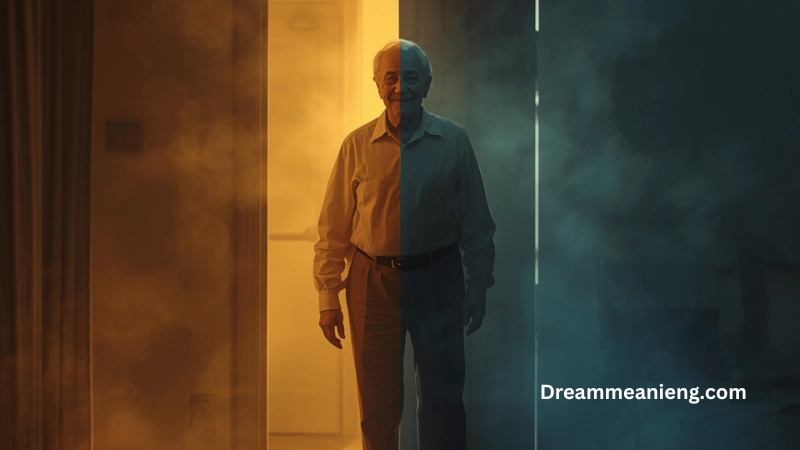
The meaning of this dream shifts significantly based on your grandfather’s mood, actions, and setting, so specific scenario details matter more than the general theme. Two people can have what sounds like the exact same dream, “my dead grandfather was alive,” and walk away with totally different emotional takeaways depending on what actually happened in it. That’s really the core of the dead grandfather alive in dream meaning: context beats premise, every time.
Use the table below to find your scenario fast. Then keep reading, because a couple of these deserve more than a one line summary.
| Dream Scenario | Likely Meaning |
| Grandfather smiling or laughing | Emotional peace, reassurance, a sense of blessing |
| Grandfather silent or just watching | Unspoken grief or something left unresolved between you |
| Grandfather giving specific advice or words | Your own inner wisdom surfacing through his voice |
| Grandfather looks unwell or distressed | Lingering guilt, worry, or an unaddressed fear |
| Grandfather at the old family home | Longing for roots, tradition, or a simpler time |
| Grandfather doesn’t recognize you | Fear of losing connection to your past or heritage |
| Grandfather hands you an object | A message about a coming decision, opportunity, or responsibility |
Two of these are worth slowing down for.
Take the one where your grandfather doesn’t recognize you. Honestly, this one tends to sting more than seeing him upset. It shows up a lot around big life changes, a move, a new job, some shift in who you’re becoming, when part of you is quietly afraid that growing into this new version of yourself means losing the thread back to where you started. It’s rarely about him forgetting. It’s about you worrying the roots are getting harder to reach.
Then there’s the moment he hands you something. Pay attention to the object. Keys tend to point toward new opportunities, access to something you’ve felt locked out of, whether that’s practical or emotional. A photograph usually points the other direction, backward, toward memory and family history rather than anything ahead of you.
What Does It Mean If Your Dead Grandfather Talks to You in a Dream?
When a deceased grandfather speaks clearly in a dream, it usually represents your own inner voice offering clarity, using his image as a trusted messenger. Dreams rarely conjure wisdom out of thin air. More often, they’re repackaging something you already half know, just in a voice you’re more likely to actually trust.
There’s a real difference between two versions of this that people often lump together:
- Specific, verbal advice (“Don’t take that job,” “Call your brother”) tends to reflect a decision you’ve already been leaning toward, minus the permission to actually make it.
- Vague or symbolic gestures, a nod, a hand on your shoulder, pointing at something without a word, usually reflect a need for reassurance more than direction. You’re not really hunting for an answer. You’re hunting for permission to trust the one you already have.
Warm, comforting words in these dreams generally point to something already settled inside you, even if it doesn’t feel settled yet. Urgent or warning tones are a different animal, they tend to reflect anxiety about something real and specific that your waking mind hasn’t fully faced.
Why Do You Keep Dreaming About Your Dead Grandfather Years Later?
Recurring dreams about a grandfather who passed away long ago are usually triggered by a current life transition that unconsciously echoes the stability he once represented, not by the anniversary of his death alone. Go ten, fifteen years without dreaming of him, then suddenly he’s back? Something in your present is almost certainly doing the summoning.
One pattern comes up over and over in real accounts of this dream: someone loses a parent, and not long after, a grandparent who’s been gone for years shows up in a dream instead. One woman, for instance, hadn’t dreamed of her grandfather in over a decade until the week she found out she was pregnant, an easy pattern to miss unless you’re looking at the generational shift underneath it. Sounds backward at first. Wouldn’t grief bring the person you just lost into your dreams, not someone gone for over a decade?
Except it tracks once you look at it through a generational lens. When a parent dies, the “elder” role in a family shifts, someone has to hold that space now. Your grandfather, as an earlier occupant of that role, can resurface as a kind of stand in, carrying the stability and guidance that position has always represented, even as the actual person filling it changes. This is really the dead grandfather alive in dream meaning showing up in its purest form, a role, not just a person, reasserting itself during a generational shift.
A few other common triggers worth naming:
- A new job, marriage, or major milestone that quietly stirs up old memories of being guided, or approved of.
- Becoming a parent yourself, which tends to pull the grandparents who once guided you back into your dreams as your brain adjusts to the generational shift.
- A meaningful birthday or anniversary, even one that has nothing to do with his death, that just happens to put you in a reflective headspace.
If the dream keeps repeating, pay attention to what changes between one and the next. Same setting every single time? That’s often an anchor memory your mind keeps returning to for comfort. His mood softening across repeat dreams, from distant to warmer, often mirrors your own grief doing the same. A single dream that shows up decades later, right after one specific event, is usually just a direct response to that event, not the start of a pattern.
Is It a Good Sign or a Bad Sign to Dream About a Dead Grandfather?
There is no universal good or bad verdict; the emotional tone of the dream, not the fact that he appeared, determines whether it reflects comfort or unresolved distress. That’s worth saying plainly, because a lot of dream content out there treats any appearance from the deceased as either automatically comforting or automatically ominous. Neither one really holds up under scrutiny.
Signs the dream is leaning positive:
- Warm lighting, an unhurried pace, time together that doesn’t feel rushed
- Physical closeness, a hug, holding hands, just sitting near each other
- Him looking at ease, healthy, maybe younger than his final years
Signs it’s reflecting distress worth sitting with:
- A sense of urgency, fear, or not being able to reach him
- Dark, unfamiliar, or chaotic settings
- Him appearing trapped, reaching out, or unable to speak
One myth worth killing outright: dreaming of someone who’s died is not, by itself, an omen for anything about to happen in your waking life. What the dream’s tone actually tells you is something about where you are emotionally right now, not about the future. If it felt heavy, that heaviness is worth paying attention to. It’s not something to be afraid of.
The Psychological, Cultural, and Religious Meaning Behind This Dream
Psychologists, dream researchers, and religious traditions each offer a different lens on this dream, and understanding all three gives a fuller picture than relying on just one. None of these views cancels out the others, either. A dream can be psychologically meaningful and spiritually significant to you at the same time, and honestly, most people experience it as both.
The Psychological Perspective
Carl Jung, the founder of analytical psychology, described a figure that kept showing up across dreams and mythology, one he called the Wise Old Man archetype. This figure represents inner wisdom, moral guidance, and a kind of quiet authority, and Jung believed it emerges from what he called the collective unconscious, patterns of meaning shared across human experience rather than invented by any one person. When your grandfather steps into that role in a dream, Jung’s framework suggests you’re really accessing your own inner authority, just borrowing his familiar face to carry it.
Freud saw it differently. Working decades earlier, he tended to view dreams of the deceased as wish fulfillment, a way of resolving desires or conflicts the conscious mind keeps suppressed during waking hours. Where Jung saw archetypal wisdom, Freud tended to see unresolved personal need underneath it.
Modern bereavement psychology adds a third layer. This is the continuity of bonds idea mentioned earlier, which treats these dreams as part of a healthy, ongoing relationship with someone you’ve lost rather than a symptom you need to move past. Some dream researchers who study dream incubation, the mind’s tendency to “invite” certain figures during stressful stretches, believe emotionally significant people like grandparents tend to surface more often during major life transitions, though this isn’t settled science so much as a working theory worth knowing about.
What Different Cultures and Faiths Believe About This Dream
Islamic, Christian, and Hindu traditions each interpret this dream somewhat differently, but most treat a peaceful appearance as a sign of comfort or good standing rather than a fixed, universal prophecy.
In many Islamic interpretive traditions, dreams of deceased relatives, particularly ones where the person appears at peace, are often understood as a sign of their good standing in the afterlife. That said, interpretation varies quite a bit by scholar and school of thought, and some interpretive approaches do read specific dream details as meaningful guidance rather than comfort alone, so it’s treated as a deeply personal experience rather than a fixed rule everyone follows the same way.
Christian and broader biblical traditions have long treated dreams as a channel through which comfort or meaning can arrive, though most contemporary Christian thinkers steer away from reading literal prophecy into a dream about one specific relative. Comfort and reflection tend to win out over prediction.
In Hindu and various South Asian traditions, ancestors are often understood to stay spiritually connected to living family members, and their appearance in a dream can be received as a form of continued blessing or guidance, especially around family decisions or milestones.
Outside any formal religious doctrine, there’s a broader folk belief in “visitation dreams”, the idea that an unusually vivid, almost too real dream might be an actual visit from someone who’s died. It shows up across plenty of Western and non Western cultures alike. There’s no scientific consensus behind it, to be clear, but the comfort people find in it is real, and dismissing that outright feels a little unfair to what someone’s actually going through.
What Should You Do After This Dream?
Rather than searching for a hidden omen, use the dream as a prompt for reflection; three simple steps can help you process what it may be surfacing.
- Write down the specific details before they fade. Dream memory degrades fast, sometimes within minutes of waking. Jot down his mood, what he said or did, where you were, how it all felt. Those details matter far more than the broad “I dreamed about my grandfather” summary you’ll remember by lunchtime.
- Ask yourself what part of your life could use the stability or wisdom he represented. Is there a decision you’ve been sidestepping? A transition where his opinion would genuinely matter to you? The dream is often pointing at that gap more than at him specifically.
- If the dream involved unfinished words or visible regret, try naming it out loud, or writing it down, the one thing you wish you’d told him. Some people find it more useful to bring that memory to a living family member who knew him, a parent, an aunt, a cousin, turning the dream into an actual conversation instead of something you sit with alone.
Frequently Asked Questions
What is the dead grandfather alive in dream meaning? The dead grandfather alive in dream meaning usually reflects your mind processing grief, memory, or a need for guidance, using his familiar presence as a comforting symbol. The specific meaning depends heavily on his mood and actions in the dream rather than the fact that he appeared at all.
Is dreaming about a dead grandfather a good sign? Not automatically. A calm, warm dream tends to reflect emotional comfort and peace, while a distressing or fearful one usually points to unresolved grief. The tone of the dream matters far more than the premise.
Why do I keep dreaming about my dead grandfather after so many years? Recurring appearances, especially after a long gap, are often triggered by a current life transition that unconsciously echoes the stability he once represented. A new role, loss, or milestone can bring him back into your dreams as a stand in for guidance.
What does it mean if my dead grandfather doesn’t recognize me in the dream? This scenario usually reflects your own fear of losing connection to your past or heritage, often surfacing during a period of identity change. It’s rarely about him forgetting you, and it tends to show up most around moves, new jobs, or other moments when you’re becoming someone slightly different from who you were before.
Can dead relatives actually visit you in your dreams? There is no scientific consensus supporting literal visitation, but many cultural and religious traditions hold this belief, and the emotional comfort it provides is genuine regardless of your personal stance on it, which is often reason enough to let the experience mean something to you personally.
What does it mean when your dead grandfather gives you something in a dream? The object usually carries the message. Keys often symbolize new opportunities and may arrive right before a real decision opens up in your life, while photographs or heirlooms tend to point backward, toward memory, heritage, and family continuity rather than anything ahead of you.
Is dreaming of a dead grandfather mentioned in religion or spirituality? Yes. Islamic, Christian, and Hindu traditions each offer their own interpretation, generally treating peaceful appearances as a sign of comfort or blessing, though interpretations of how literal that message is meant to be vary by tradition and individual belief.
Final Thoughts
So, if you’ve been sitting with a dream about your dead grandfather being alive again, here’s the most honest thing this article can tell you: the dead grandfather alive in dream meaning almost always comes back to you, your grief, your memories, whatever you’re wrestling with right now, more than it comes back to him. That’s not a smaller answer, and it’s not a letdown either. It means the people we love keep shaping us long after they’re gone, quietly showing up in our sleep exactly when we need a piece of them the most.
However you choose to read the dream, spiritually, psychologically, or just as a tender flash of memory, hold onto it gently instead of picking it apart for hidden warnings. And if it left something unresolved, let that be an invitation to sit with it, not a puzzle you’re expected to solve before breakfast.